When a workshop requires heavy-duty lifting, wide spans, long periods of continuous operation, or high levels of stability, a single-girder overhead crane often falls short—making a double-girder overhead crane the necessary choice. Many buyers struggle to decide between a single-girder and a double-girder crane when capacities overlap (typically in the 10–20 ton range). The decision should not be based on capacity alone; rather, it should hinge on factors such as operational frequency, rigidity requirements, lifting height, and the need for specialized attachments. This article provides a detailed breakdown of the application scope, key technical parameters, and procurement risks associated with double-girder overhead cranes.
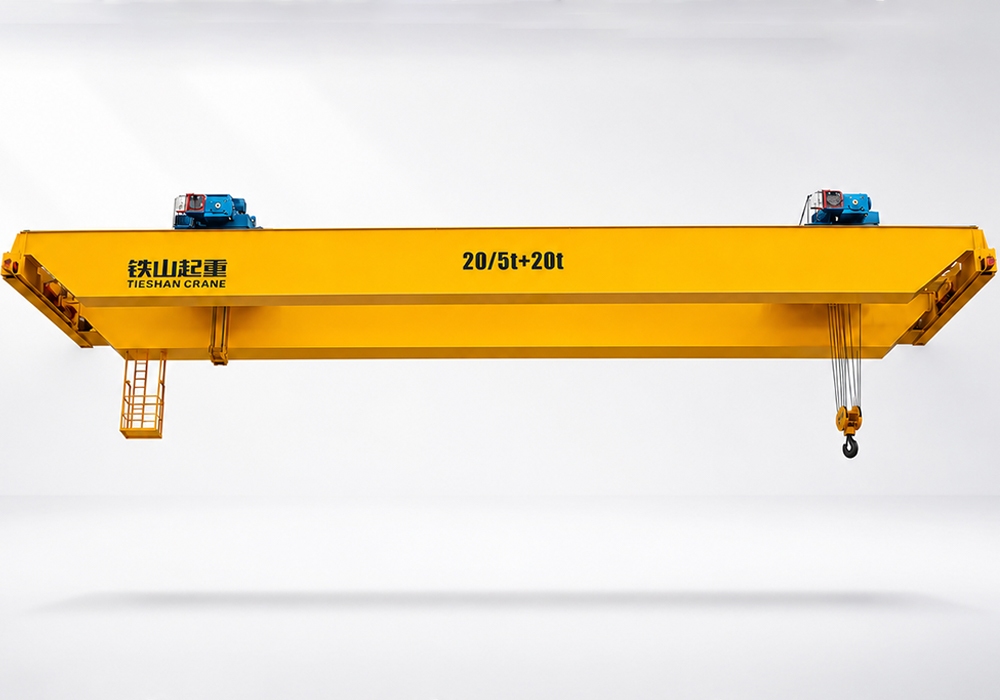
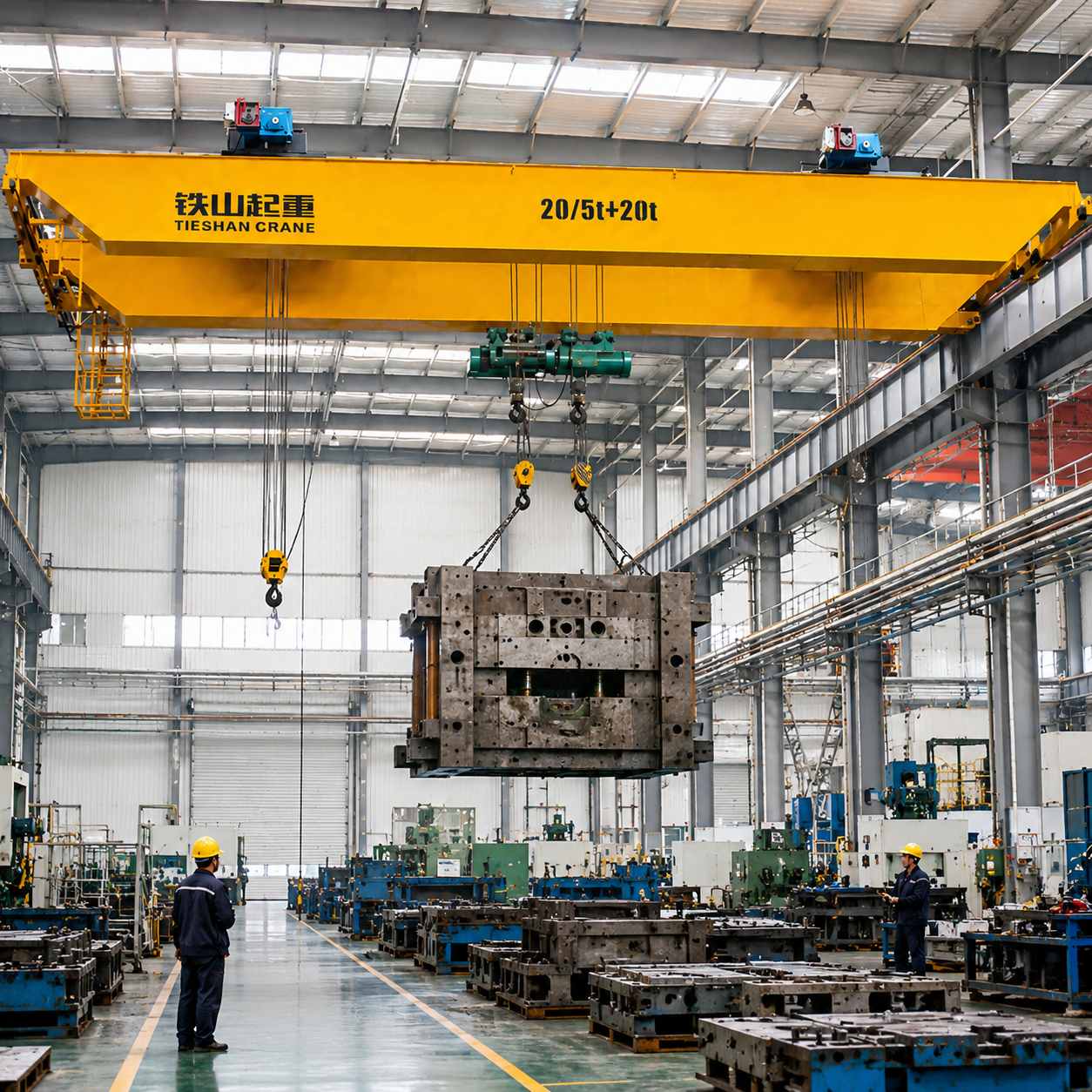
Double-girder overhead cranes feature two parallel main girders, with the hoisting trolley traveling along the top. Compared to single-girder models, they offer superior structural rigidity, greater resistance to deformation, and the capacity for higher lifting heights. They can be equipped with various tools—such as main and auxiliary hooks, electromagnetic chucks, grabs, or rotating spreaders—and are rated for duty classes ranging from A5 to A8. Designed for heavy-duty, continuous operation, these cranes cover capacities from 5 tons to several hundred tons, with spans reaching 31.5 meters or more. They serve as the primary lifting equipment in sectors such as metallurgy, heavy equipment manufacturing, steel structure fabrication, and heavy-duty assembly workshops.
When is a double-girder overhead crane the mandatory choice?
- Rated lifting capacity exceeding 20 tons, or 10–20 tons with high-frequency, continuous daily operation (Class A5 or higher);
- Large factory span, requiring a high lifting height or the ability to raise the crane hook to its absolute upper limit to accommodate tall workpieces;
- Operations requiring precision lifting or involving high-value workpieces, where strict control over swaying and high stability are essential—such as the assembly of heavy machine tools, pressure vessels, or wind power components;
- Requirements for specialized rigging configurations, such as main and auxiliary hooks, electromagnetic chucks, or grabs, allowing a single crane to perform various types of lifting tasks;
- Harsh operating environments, such as high-temperature metallurgical facilities or foundries, which necessitate specialized metallurgical double-girder cranes equipped with heat resistance and thermal insulation.
Common pitfalls when purchasing double-girder overhead cranes:
- Low-cost proposals may involve reducing the thickness of the steel plates or the height of the webs in the main girders. Under long-term heavy-duty use, this can lead to excessive girder deflection and structural risks. Welding, non-destructive testing (NDT), and heat treatment of the main girders are critical processes; however, some smaller, outsourced workshops may skip the NDT phase.
- Misrepresentation of the “duty class” (working class)—for instance, selling an A5-rated crane as an A6 or A7 unit. While it may function in the short term, the failure rate will spike significantly under long-term, continuous use.
- Overlooking the load-bearing capacity of the factory’s runway beams: Double-girder cranes are significantly heavier than single-girder models. The runway foundation, concrete columns, and roof structure must undergo specific load-bearing calculations. Many clients focus solely on the price of the crane, only to find that the subsequent costs for reinforcing the factory structure far exceed any savings on the equipment itself.
- Compromising on the electrical control system: Features such as variable-frequency drive (VFD) speed control, synchronous control, overload protection, travel limit switches, anti-collision systems, and fault data logging are vital for operational safety and equipment longevity. Prioritizing the lowest price at the expense of these core technical specifications is a mistake.
When selecting equipment, key specifications to confirm include: rated lifting capacity, main and auxiliary hook configuration, span, lifting height, crane runway length, duty classification, speed control method (variable frequency drive or resistance-based control), operation mode, and environmental conditions (e.g., high temperature, dusty environments, or explosion-proof requirements). Additionally, consider whether remote monitoring or data acquisition capabilities are needed.
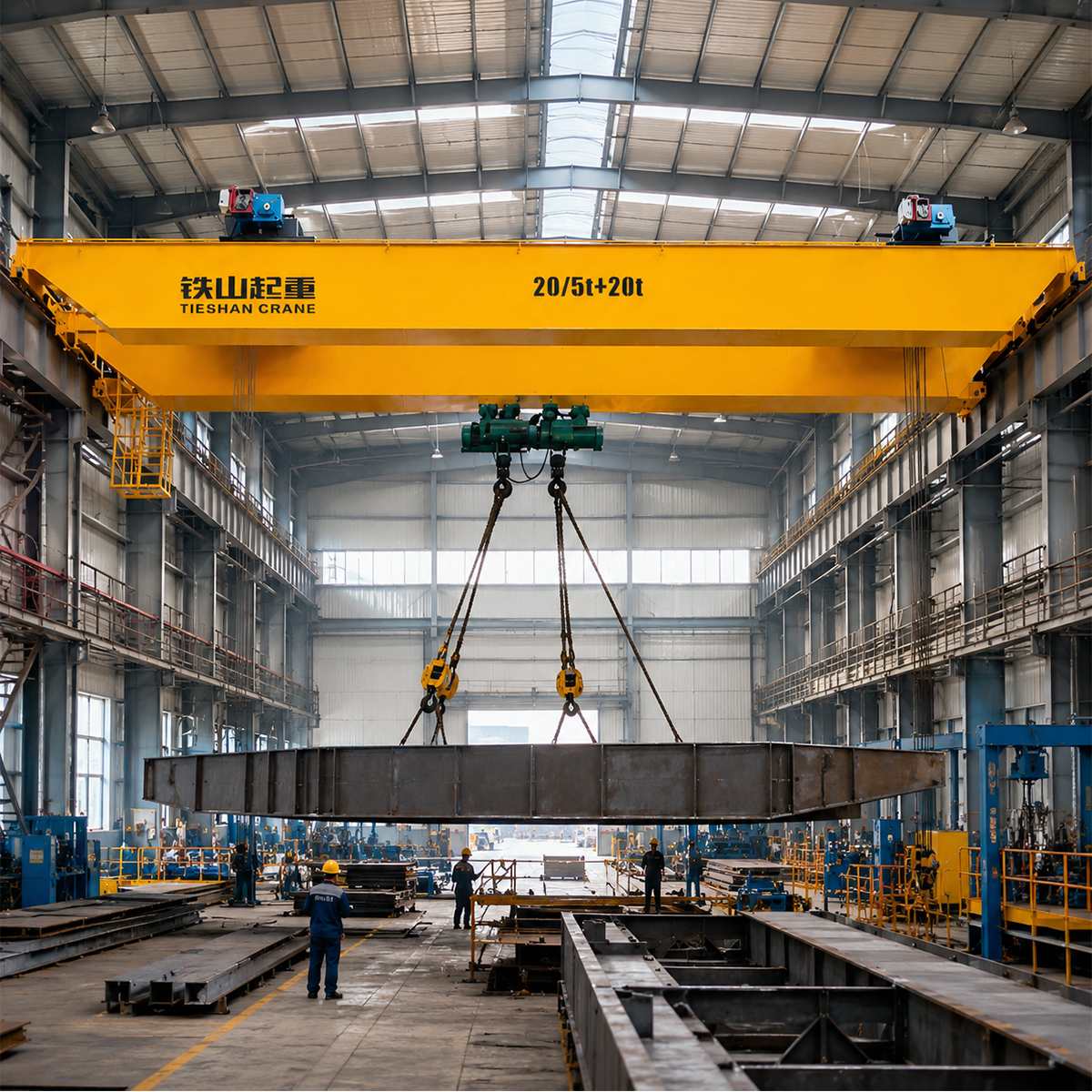
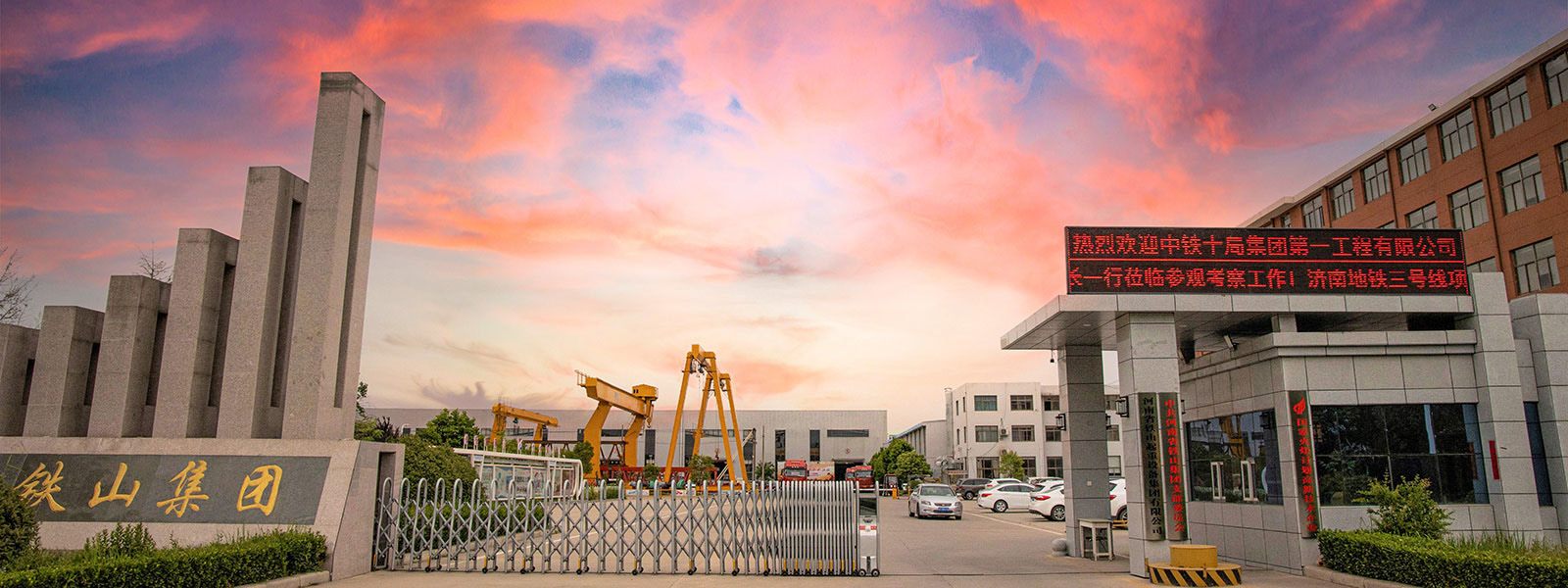
As an established heavy-industry group, Henan Tieshan Lifting Equipment Group possesses comprehensive, end-to-end capabilities—from manufacturing and non-destructive testing to load testing—for double-girder bridge cranes. Our product range includes general-purpose, metallurgical, and explosion-proof double-girder cranes. Every unit undergoes rigorous factory testing and load-bearing trials in strict accordance with national standards. We have served a wide range of enterprises in heavy industry, steel structure fabrication, metallurgy, and equipment manufacturing. For heavy-duty, continuous-operation environments, we optimize main girder structures, welding processes, and braking systems, while providing smooth variable-frequency control solutions. Cranes can be equipped with both operator cabins and remote-control systems, and we offer OEM/non-standard customization. Our technical team provides on-site surveys and structural load analysis during the planning phase, followed by post-delivery support, including installation guidance, commissioning, and ongoing maintenance—an ideal solution for industrial clients who demand high equipment stability and long-term operational uptime.